ee Min-ah doesn't give interviews. She doesn't walk red carpets. You won't find her name in entertainment headlines unless you're reading the fine print of a production credit. Yet her fingerprints are all over some of the most distinctive Korean films of the past decade—films that have traveled from Busan to Cannes, from niche streaming platforms to packed art-house theaters. I first noticed her name in the credits of a low-budget indie that punched far above its weight. Then again. And again. That kind of consistency isn't accident;it's authorship.
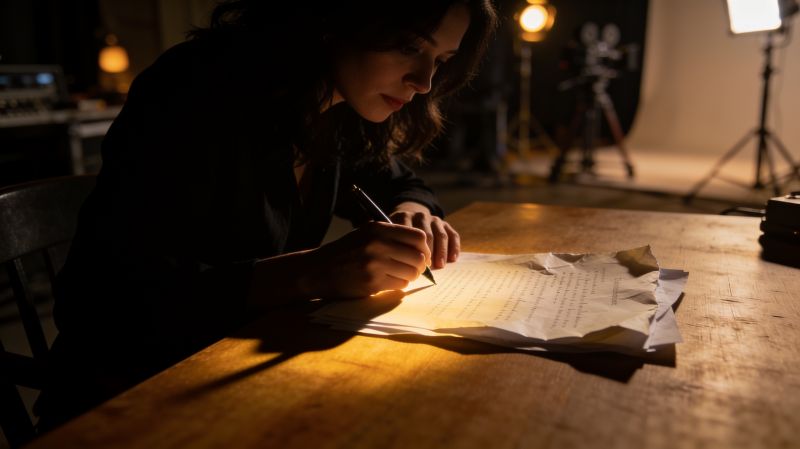
Her work as a producer and occasional script editor operates on a principle she once described in a rare panel appearance as "negative space"—the idea that what you leave out defines the story as much as what you put in. On one project, she reportedly cut three major scenes from a director's cut, not because they were bad, but because they explained too much. The result was a film that trusted its audience. Critics called it "confident." I'd call it brave. Lee Min-ah seems constitutionally allergic to hand-holding.Industry insiders talk about her the way people talk about a good editor—with reverence and a hint of fear. She has a reputation for reading a script once and identifying the exact structural flaw that will sink it. "She doesn't rewrite your story," a director told me over coffee last spring. "She makes you realize you already knew what was wrong." That's a rare skill. It's also, frankly, a thankless one in an industry that celebrates visible spectacle. Lee Min-ah has built her career on the invisible architecture that makes spectacle possible.What's striking is how little she seems to care about the recognition economy. While peers chase festival premieres and press cycles, Lee Min-ah has spent the last few years quietly mentoring first-time directors through a small workshop she co-founded in Seoul. No sponsorships, no press releases. Just a room。a projector, and a rotating cast of young filmmakers who learn by doing. Two of the films that came out of that workshop last year ended up in major festivals. She didn't attend either screening. When asked why, she shrugged and said she'd already seen the cuts. That's Lee Min-ah in a sentence—present at the work, absent from the applause.The Korean film industry is at an inflection point, flush with global attention but increasingly risk-averse in its storytelling. In that context, Lee Min-ah's approach feels almost countercultural: slow, deliberate, unglamorous. She isn't trying to make the next global hit. She's trying to make films that survive their own opening weekend. It's a quieter ambition。
but arguably a more durable one. If the next wave of Korean cinema feels more honest than the last, don't look for her in the spotlight. Look for her name in the credits. She'll be there.